Report: Algorithmic Art Assembly v3.0
April 29, 2026
The Algorithmic Art Assembly v3.0 took place March 26-28 at the Gray Area/Grand Theater in San Francisco. My friend James and I were there to take in three days of talks and concerts. Here were the highlights from that trip.
Prologue
William Fields sent an update to his email list in January about his upcoming performance at the Algorithmic Art Assembly v3.0 (aka AAA). I had heard of AAA before but missed the first one in 2019 and the second one in 2022. Now the third one was upon us. The program featured three artists that were important to me: William Fields, Gábor Lázár, and Kara-Lis Coverdale.
I texted my friend James on a whim to see if he had any interest in going. He texted back right away, "Yeah let's do it." That's what I'm talkin' 'bout! He and I had been cooking up an electronic music project but it had stalled out. We thought going out to AAA might rekindle it. We bought tickets to AAA and booked the plane tickets and Airbnb.
Day One
A couple months later there we were in San Francisco. It was a Thursday and we arrived around noon. We made our way to the Mission District where our Airbnb and the Grand Theater were.
We had a few hours to kill before the AAA performances started that night, so we strolled to Grand Coffee a few blocks away. As we waited in line I thought I recognized the barista taking orders. She looked like Kim, an old friend of mine from elementary through high school in Illinois. We hadn't seen each other in over 20 years so I wasn't entirely sure.
Turns out she was indeed Kim and she was a co-owner of the coffee shop! She remembered me, too. We caught up for a while and made a plan to get together over the weekend. More on that later.
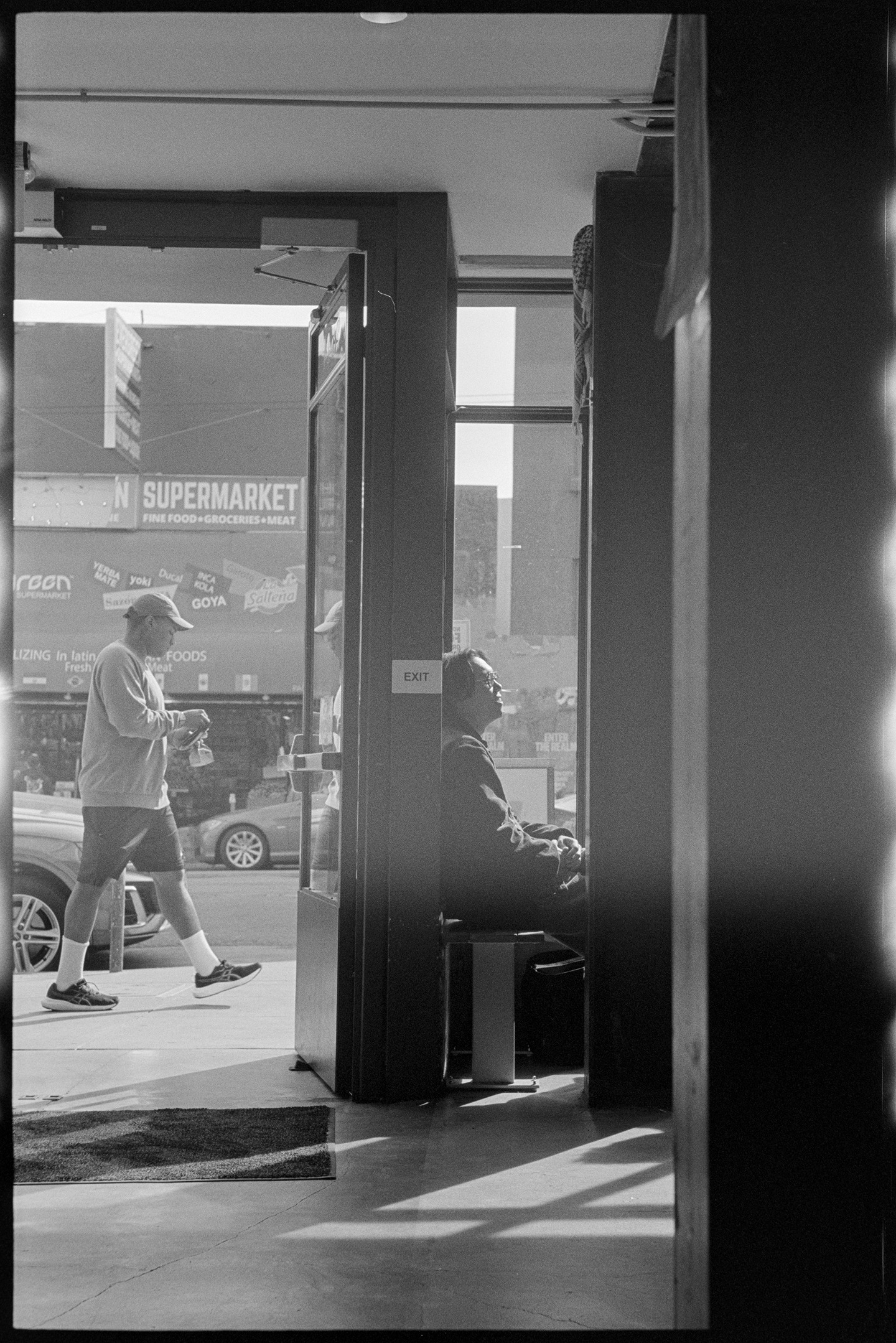
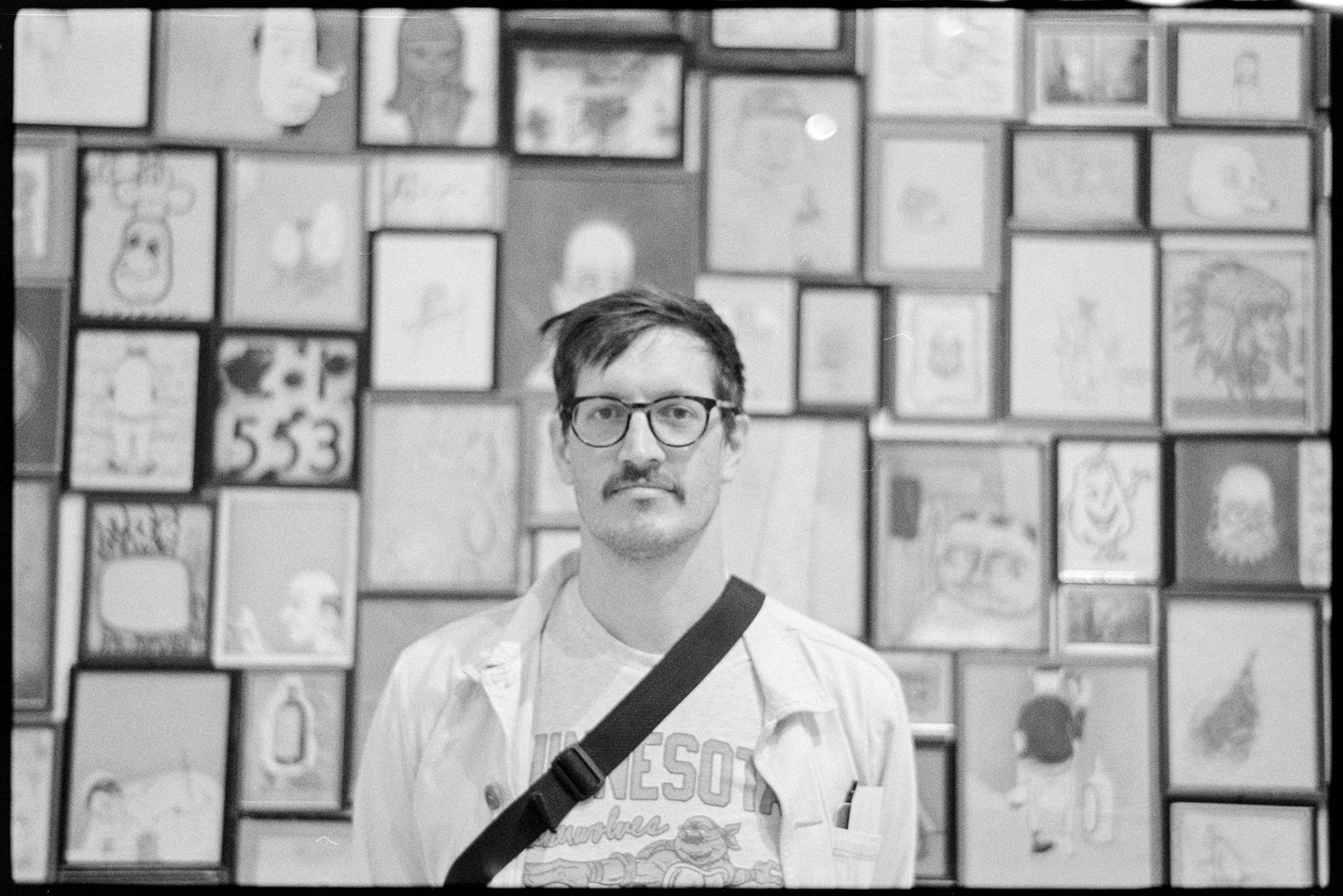
For this trip I brought my Canon 7s rangefinder camera. I had it loaded with Kodak T-Max 400 film and a Jupiter-8 50mm f/2 lens for the first roll. I developed the film with Legacy Pro L110 for 11 minutes in a dilution of 1+63 at 68º. Above is a shot from inside Grand Coffee. Note the light leaks. After the trip I located the point where the light leaks into the camera body. I'll have to fix that before I shoot with it again.
From the Mission we walked northeast toward Chinatown. We stopped at the San Francisco Museum of Modern Art along the way and enjoyed the collections.
We got dim sum at a restaurant in Chinatown that President Obama ate at once and then headed back down to the Mission for the official start of AAA.
Follow along with the full AAA program.
Watch videos of all the talks and performances.
Each of the three nights featured performances by five artists. The highlights of the first night for me were Wolff Parkinson White and William Fields.
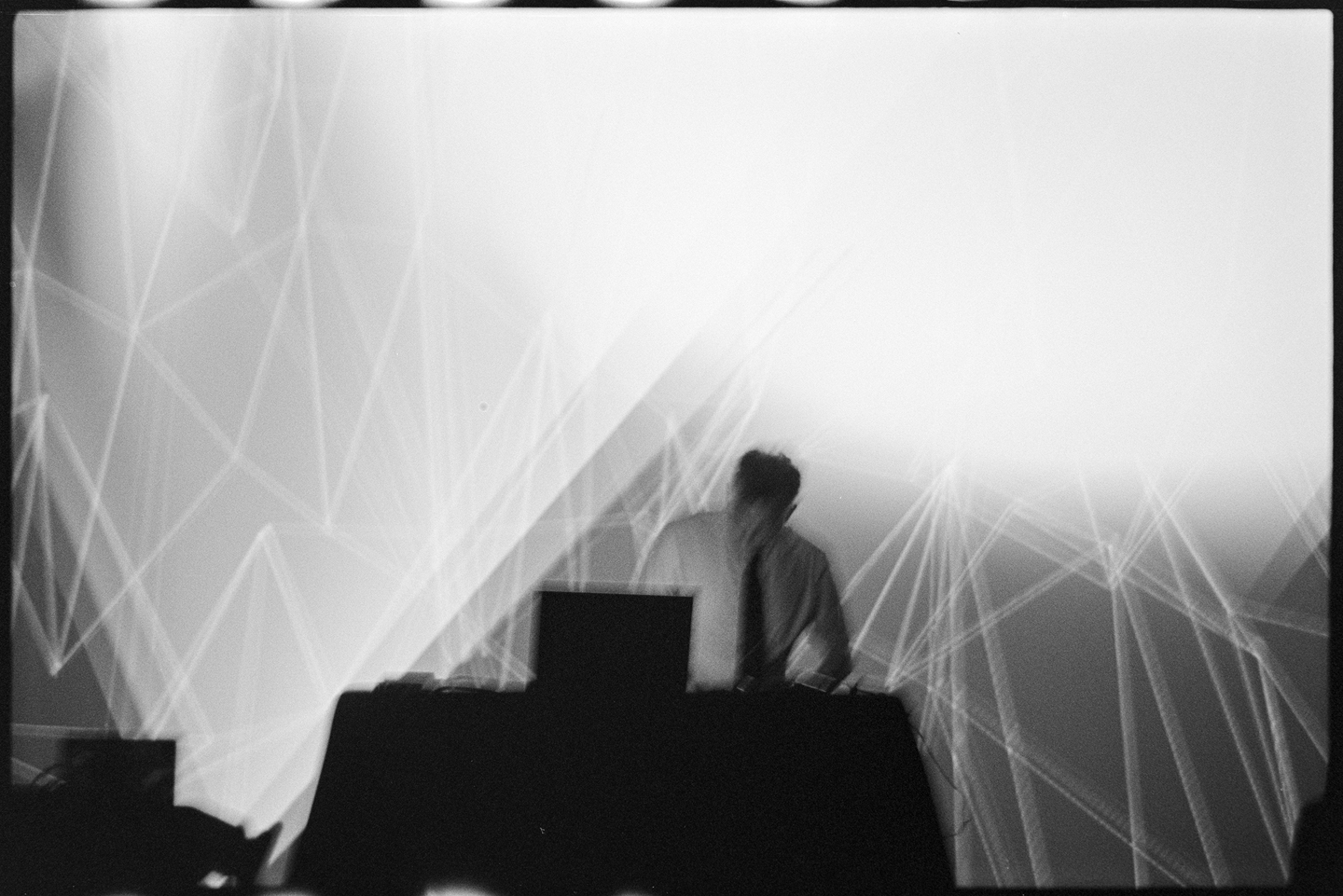
I hadn't heard of Wolff Parkinson White before. It's actually the project of a man named Jochen Rueckert. I dug the music. It has this abstract pointillistic quality that I often enjoy in electronic music.
William Fields is why I came to AAA. I only knew of its existence because of him. He's heavily influenced how I've approached coding improvisational music systems. My favorite recordings by him include Shackamaxon, Augmented Duality, Zugzwang (a duo with the aforementioned Jochen Rueckert), and the sprawling FieldsOS. His music lives in this sweet spot of foot-tapping groove, sonic chaos, and madcap playfulness. If you want a sense for his playfulness, check out the visuals provided during this live set.
The unfortunate truth is that with the long day of travel and the two-hour time difference (midnight felt like 2am) I was hitting a wall as the evening progressed. As a result I bailed on the final set which was by Kindohm and Sebastian Camens. This is a shame because Kindohm is from Minneapolis. It would have been nice to support the hometown guy. The visualizations also looked incredible.
Day Two
The second day of AAA started with a series of talks. Here were the highlights for me.
Claire L. Evans is an artist and science journalist who stresses that computation as we currently think about it is done with "rock-based computers" (i.e with mircochips made out of metals and minerals). I love this image. It demystifies computers a little bit, puts them in their place. They're not magical metaphysical devices. They're just made out of rocks.
She points out that nature is already able to do computation using biological systems that have evolved for many thousands of years. She advocates for research into bio-computing technology which is as wild as it sounds. Microchips augmented with neural cells and networks. Literally computers that have a biological life span.
Char Stiles is a computational artist known for her live visual performances accompanying music. She presented on how live coders can enhance their IDEs to be more engaging for the audience. For example, in her performances she displays live video streams and a live chat box where the audience can send messages.
Daniel Temkin presented on a fascinating programming subculture around esoteric languages, or esolangs. According to esolangs.org, these are "programming languages designed to be unique, difficult to program in, or just plain weird". Temkin's dive into the world of esolangs was mind bending. Esolangs seem to me like the conceptual art of creative coding. In fact, Temkin connected the creative work around esolangs to lots of other 20th century artists and movements, chief among them being Fluxus.
Esolangs can be used to explore and disrupt the axioms and objectives inherent in programming languages. An example of an esolang created by Temkin is Entropy, "a language where data decays the more it's used". In other words, each time you access or calculate a variable a degree of random variation is introduced in its value. A program written in Entropy would produce unpredictable results. It's an absurd language for most traditional use cases, and that's the point. Entropy subverts the idea of control at the heart of programming.
There were another five musical performances that evening. One that I really enjoyed was Luisa Mei. Much of the music at AAA was ominous and dissonant. Not Mei's. It was harmonic and entrancing. The visuals were also refreshingly colorful and surreal. She incorporated her own illustrations and footage of animals into the visual layers.
Kara-Lis Coverdale closed the evening. I've been a fan of hers since her 2017 album Grafts. I can't count the number of times I've listened to it. This was my first time getting to see her live. It was excellent, but admittedly I was lying on the ground half asleep due to jet lag. Not a bad way to experience music like hers, to be honest. You can even spot me in the video standing front and to the right of her set up. After 13 minutes I lie down on the floor for the rest of the set.
Day Three
By the final day of AAA I was really coming to appreciate the experience we'd been having. The first two days I felt out of my element being in a new city, dealing with jet lag, and initially feeling underwhelmed with some of the music. Not that the music was bad. It just wasn't up my alley. The venue itself was always dark inside and had no seating, so it wasn't a comfortable place to spend five hours watching music each night.
And yet, by the third day I was having a blast because it wasn't just about AAA. It was also about being in San Francisco, especially the Mission District which was full of amazing restaurants, shops, and people. James and I were struck by how nice everyone we encountered in the city was.
Killer donuts where they actually throw extra free donuts into your bag: ✅
Killer coffee shop which I've already covered: ✅
San Francisco won me over. I loosened up a bit and enjoyed the ebb and flo, push and pull of AAA. Not everything had to land for me. On a positive note, most of the things that didn't land for me also didn't land for James. This at least indicated that we might be well-aligned musical collaborators.
Will Rinkoff's (aka c_robo's) talk did land for me in a big way. He articulated so many of my thoughts on designing fast, efficient, and ergonomic control systems for live improvised electronic music. He, like me, was inspired by the Vim system of hotkeys and modes. He comes from a live coding background, but he's increasingly moved toward using hotkeys that automatically update and evaluate the code rather than manually updating and evaluating the code himself.
Much of his talk was geared toward the live coding community. He explored the aesthetics and values of live coding. He even shared his live coding manifesto. Not being a live coder myself I wasn't too interested in its polemics.
Veteran electronic composer Keith Fullerton Whitman gave an informal talk on his current creative practice which is based around a modular synthesis rig. He introduced the rig as his "computer" because its mostly digital modules were indeed computing the ones and zeros. I loved hearing him talk about his process. He kept it grounded and simple. His goal is to use the synthesis rig to generate complex, dynamic rhythms like the ones he enjoys in free jazz. He's even playing live with free jazz musicians with this rig. You could hear the enthusiasm and curiosity about music in his voice. The demonstration he gave of the rig sounded fabulous.
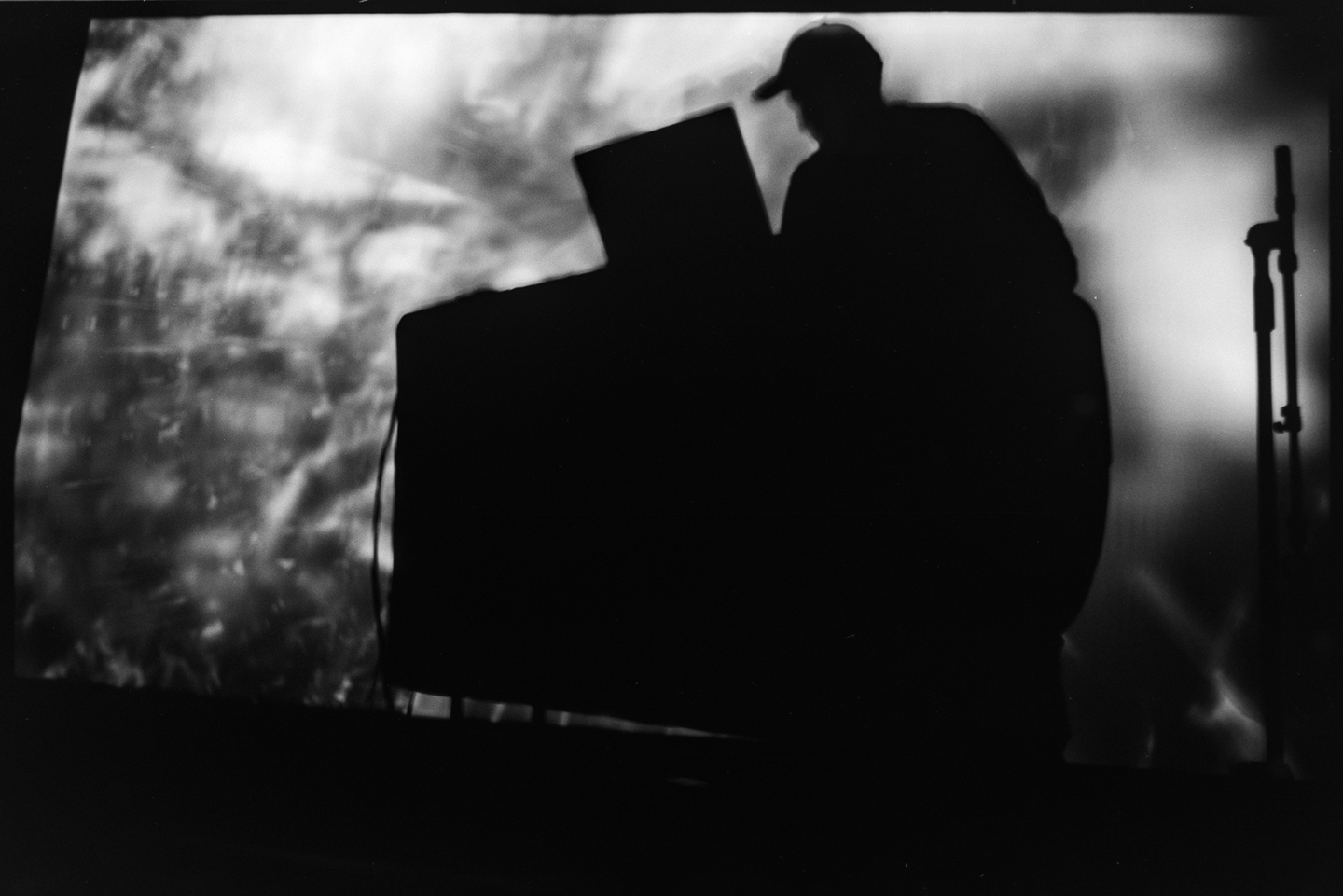
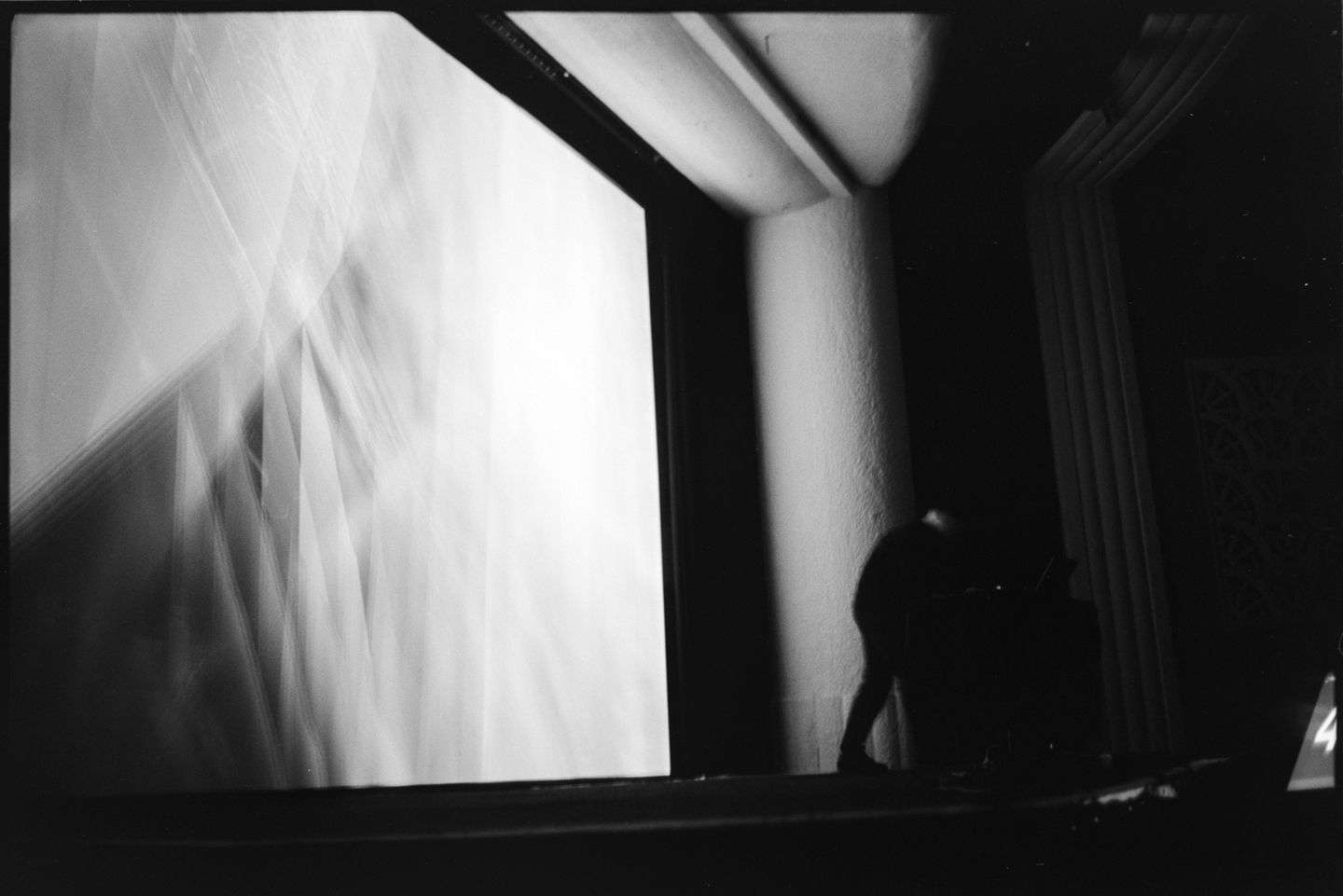
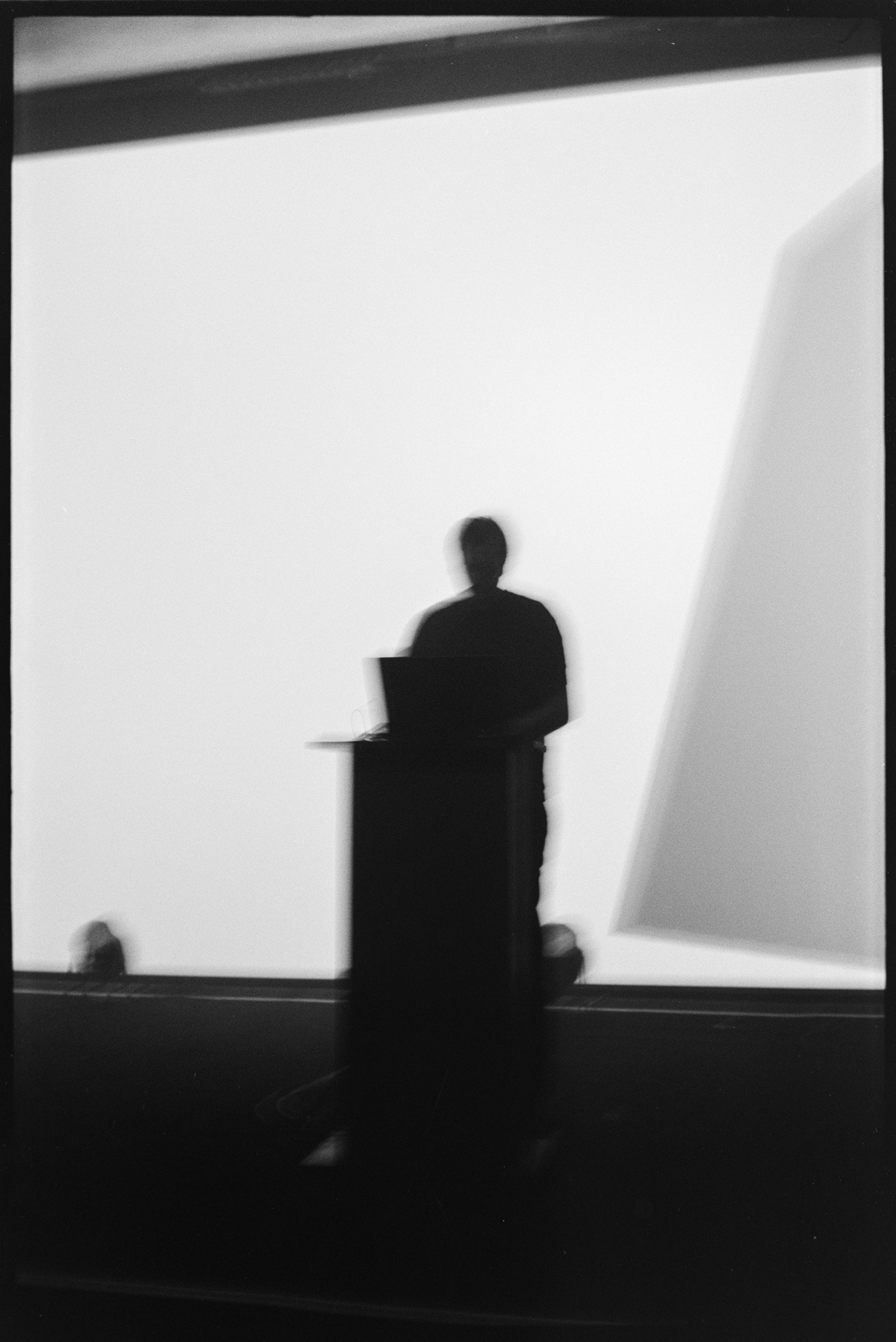
Tom Hall gave a great talk and performance. Above are a couple photos I took of his set. Note that for these photos and all the rest in this post I was shooting on FujiFilm Neopan Acros 100II with a Canon 35mm f/2 LTM lens. I developed the film with Legacy Pro L110 for 11 minutes in a dilution of 1+63 at 68º.
The Algorithmic Art Assembly might be more accurately named the Algorithmic Music and Visualization Assembly. Other forms of algorithmic art were less represented. One exception was the final talk by Carl Lostritto and Catty Dan Zhang, two professors in the School of Architecture at the University of Tennessee Knoxville. They shared their ambitious 3D modeling project called #CLOUD (Clouds Lent Out Use Discipline). Their work was technically impressive, visually dazzling, and conceptually rich.
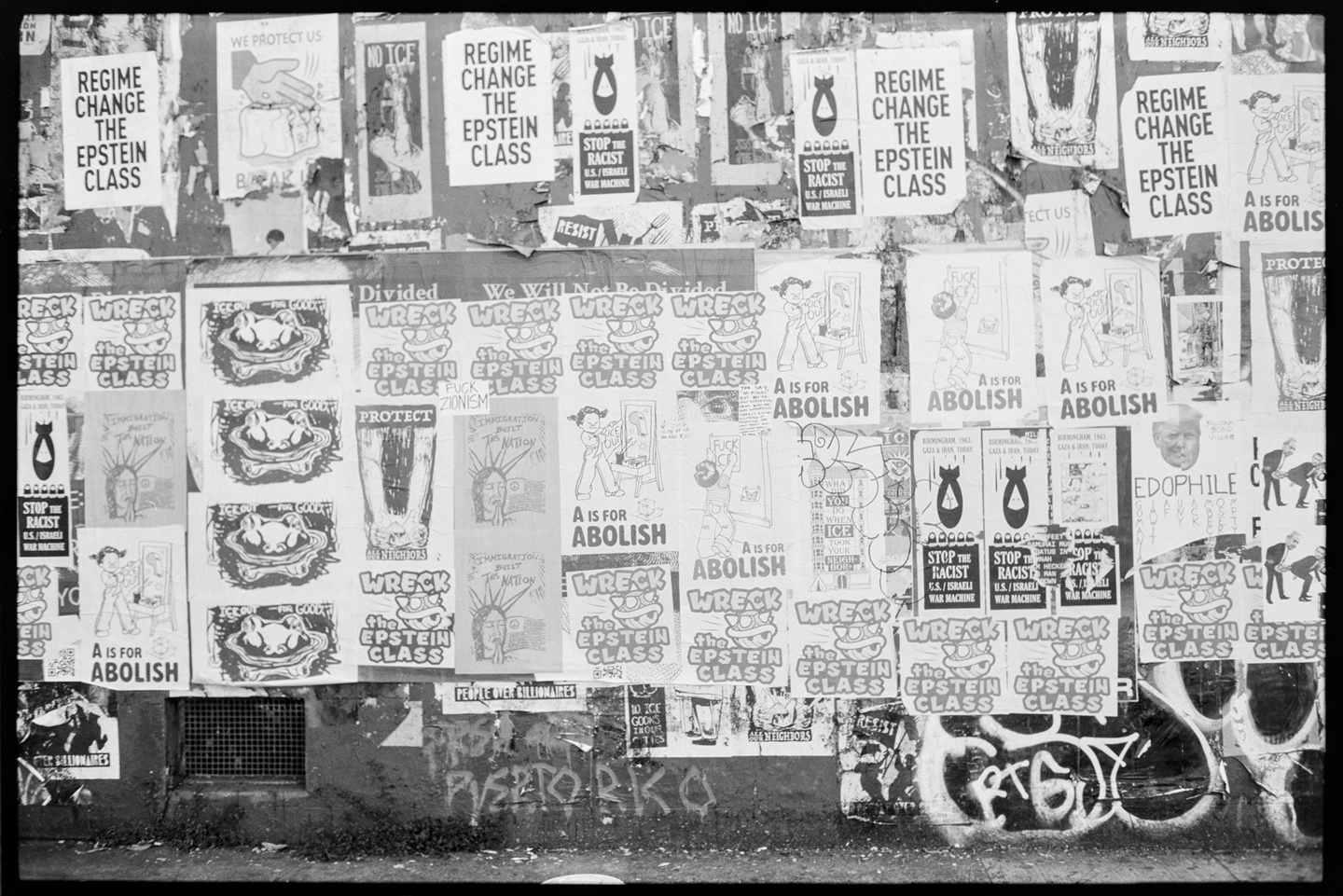
At some point in between the talks and the evening performances I shot the photo above on Valencia St. in the Mission.
Codie performed one of my favorite sets of AAA. Earlier in the day I had asked James, "Where's the whimsy, the fun?" There's only so much intense percussive music with austere visuals that I can absorb in a dark theater. Ask and you shall receive. Codie, a live coding trio that was down to just two people for this performance, brought the whimsy and fun. The music was bright and groovy. It had bass lines and sounded almost post-punky to me. I could have watched the bold colors, squiggly lines, and lovely kineticism of Sarah GHP's visuals for hours.
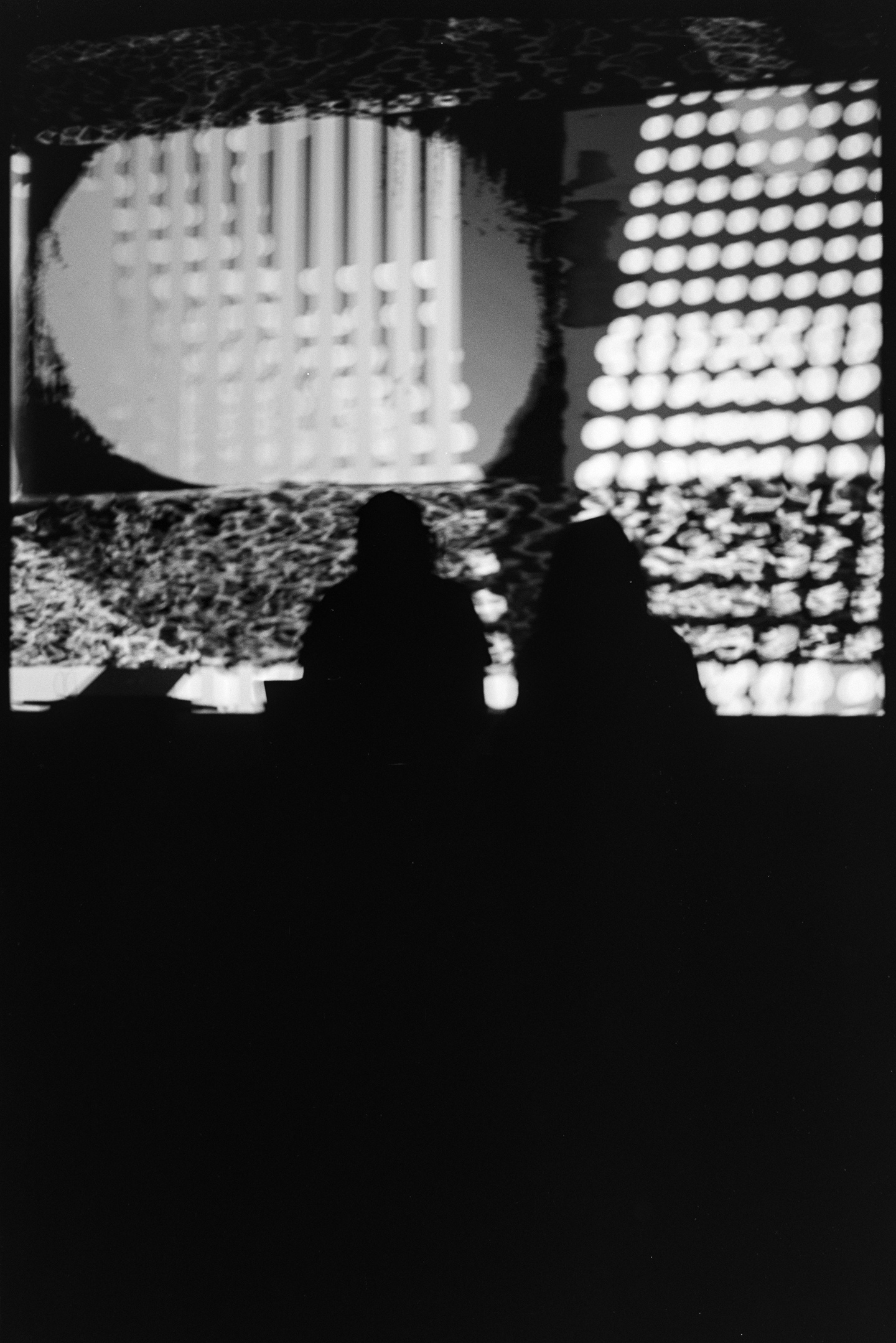
Before Keith Fullerton Whitman's set I had a chance to chat with him. Nice guy. We talked about Csound, which he learned in the 90s at the Berklee College of Music under the esteemed Dr. Boulanger. For his set he performed with the modular rig he demoed earlier in the day. Damn, the music was gorgeous. I and much of the audience laid on the floor in front of the stage. The sound rippled through my body like I was a cup of Jell-O. Normally I don't find the bodily experience of high-amplitude sound waves aesthetically compelling, but this was different. Fullerton Whitman pulled it off in a way that made for a powerful, artful experience.
Gábor Lázár played the final set of AAA. I'm such a big fan of his sound. He follows in the rigorous footsteps of Mark Fell with his algorithmic sequences of drum samples and FM synths. In fact, his collaborative album with Mark Fell was a major influence on how I've approached algorithmic performance systems. He was one of the few performers at AAA who made me dance. Admittedly, dancing to his music is a little awkward due to the unpredictable rhythms, and yet it still feels natural to let my body move around within them.
Day Four
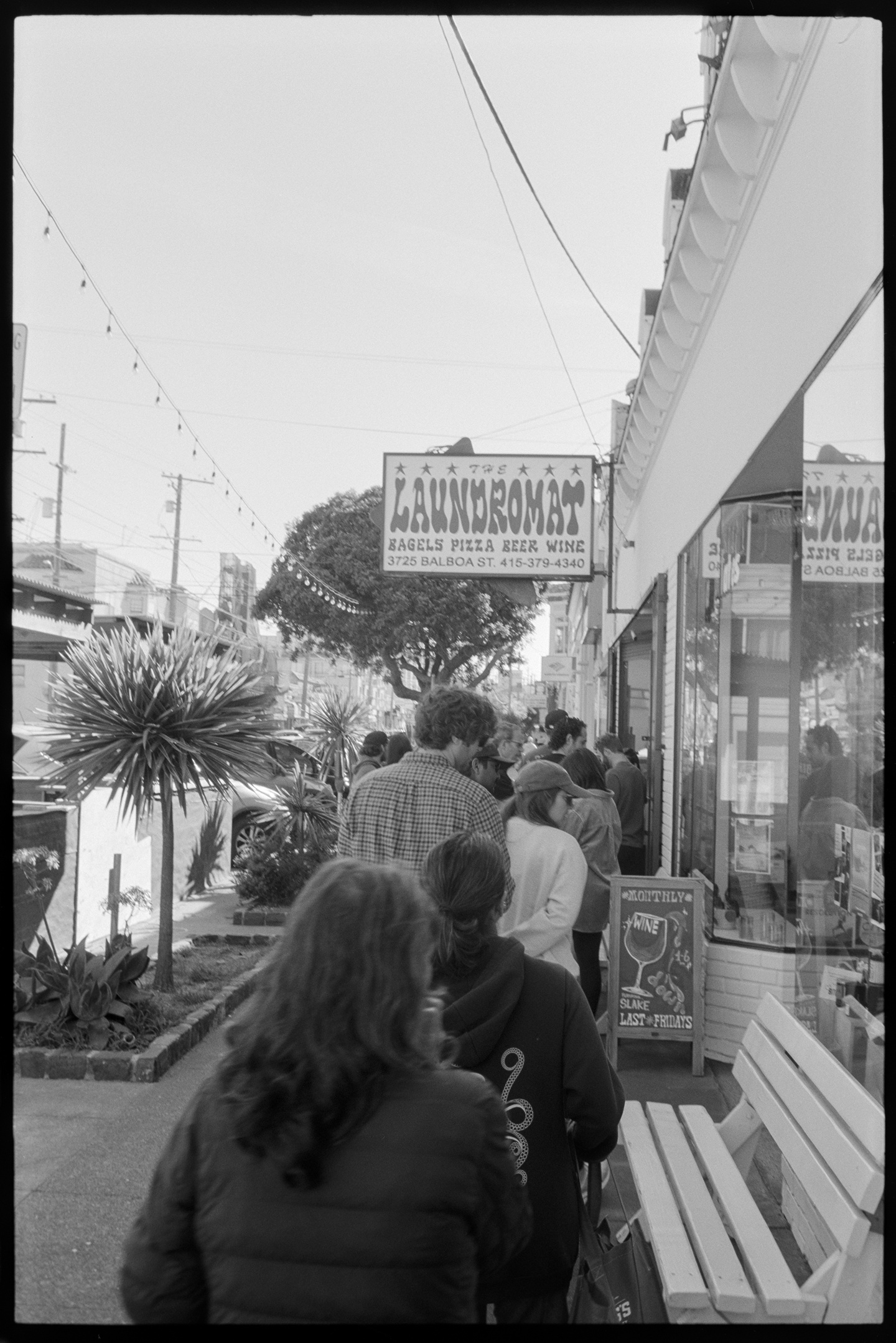
Sunday was our first completely free day. In the morning we met up with Kim in Outer Richmond. We got bagels at the Laudromat and walked west to Sutro Heights.
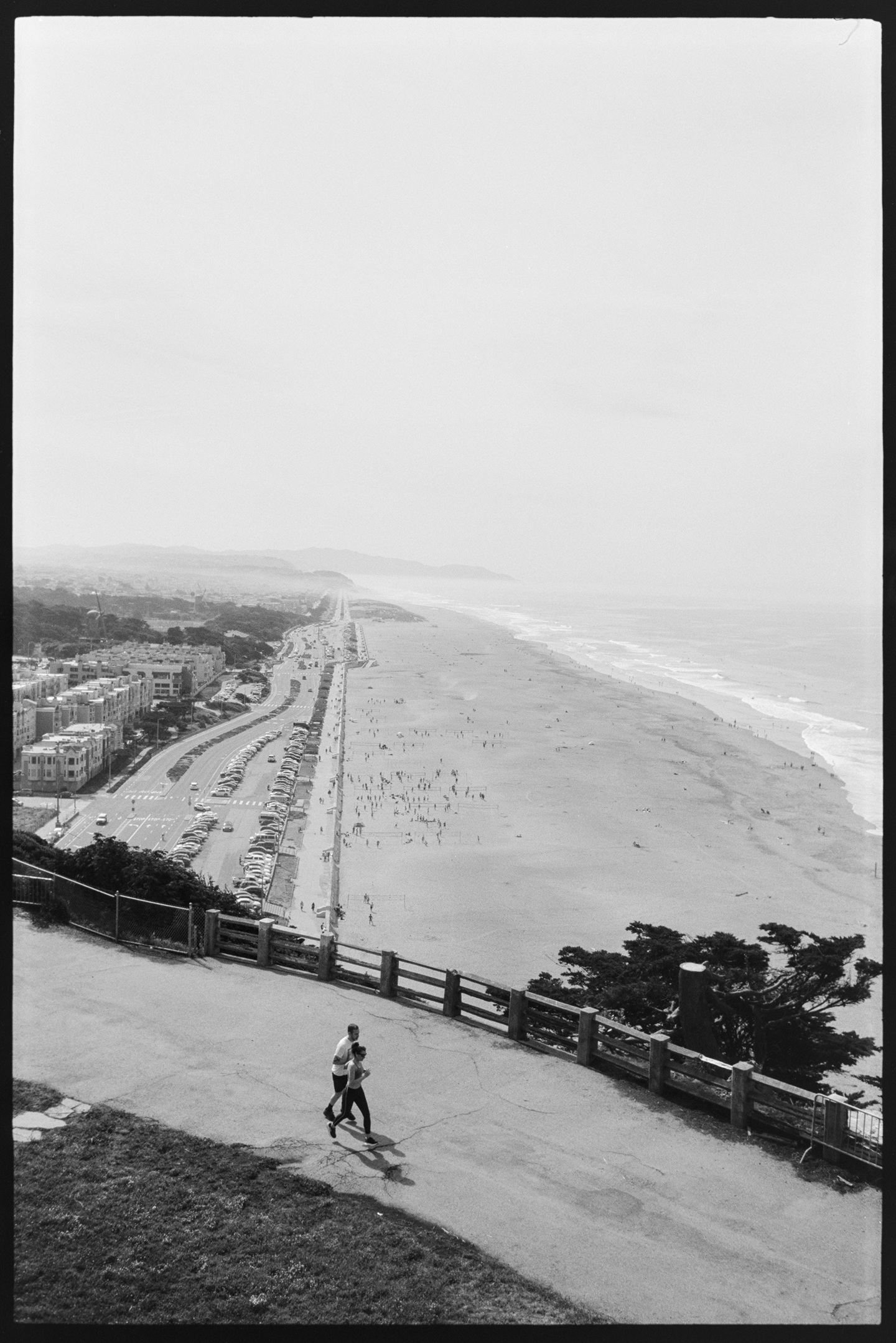
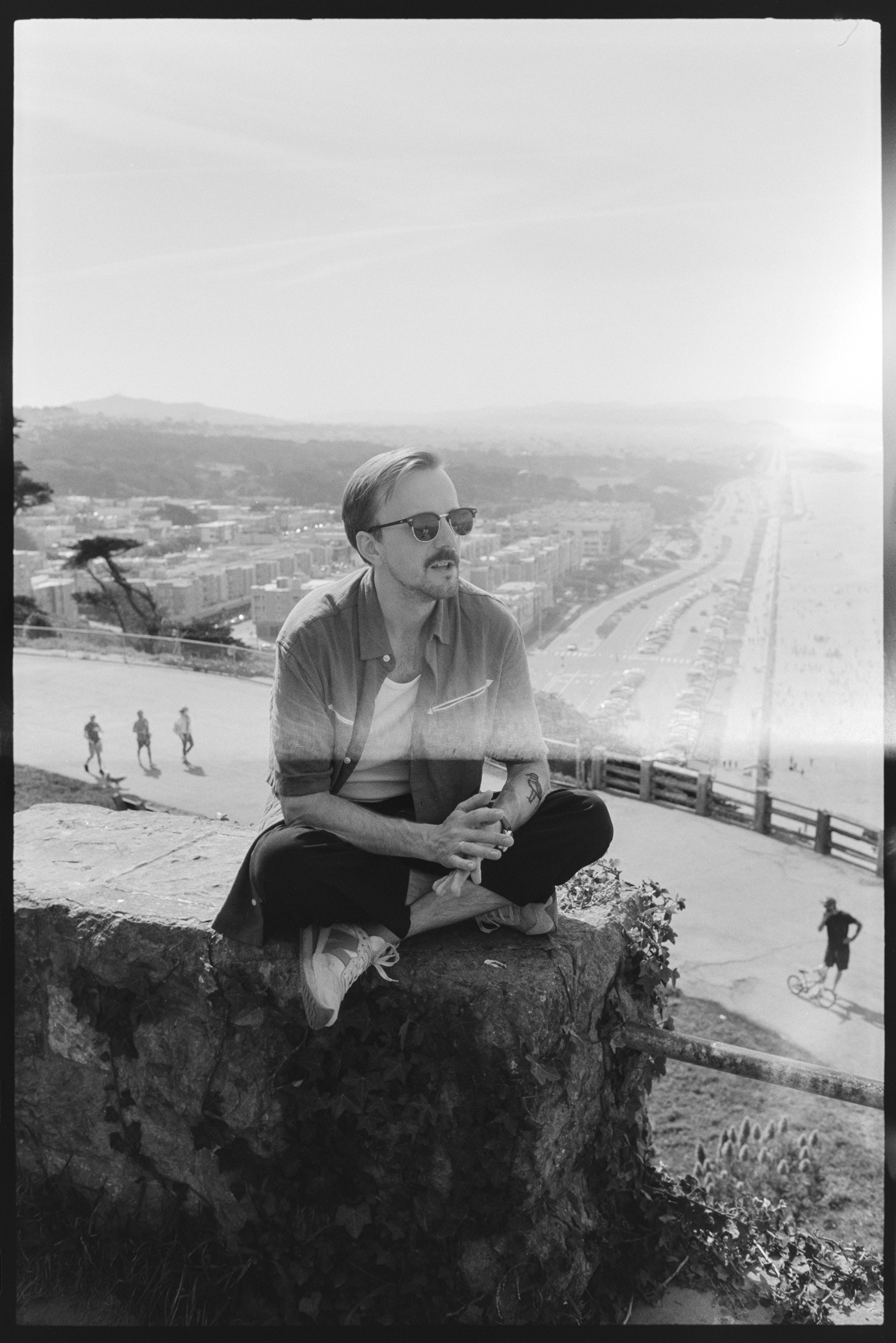
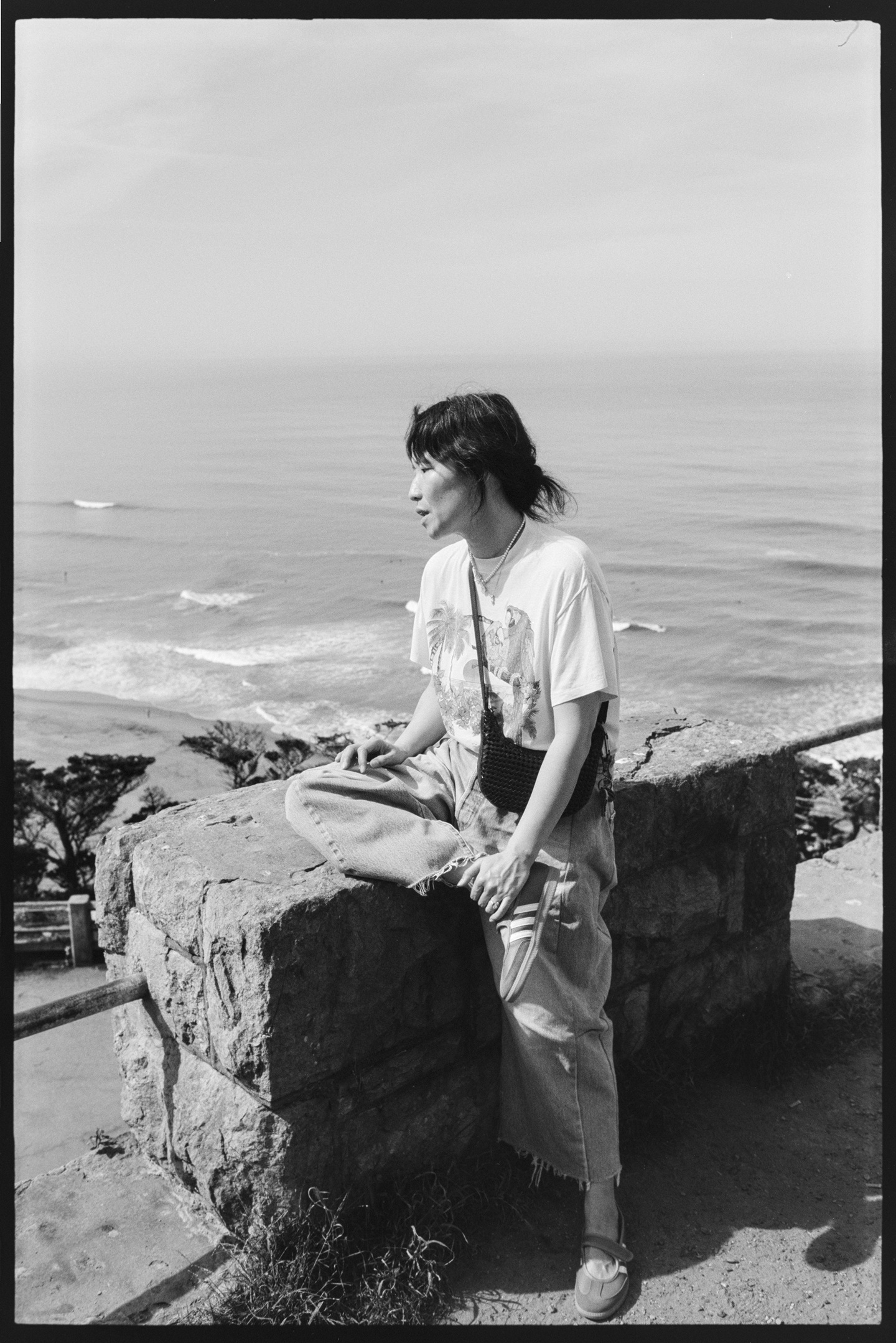
We then headed up to the Sutro Baths, a modern-day ruins on the coast that was an opulent public bath house in the early 1900s. It burned down in 1966 and the concrete remains are now part of a national recreation area.
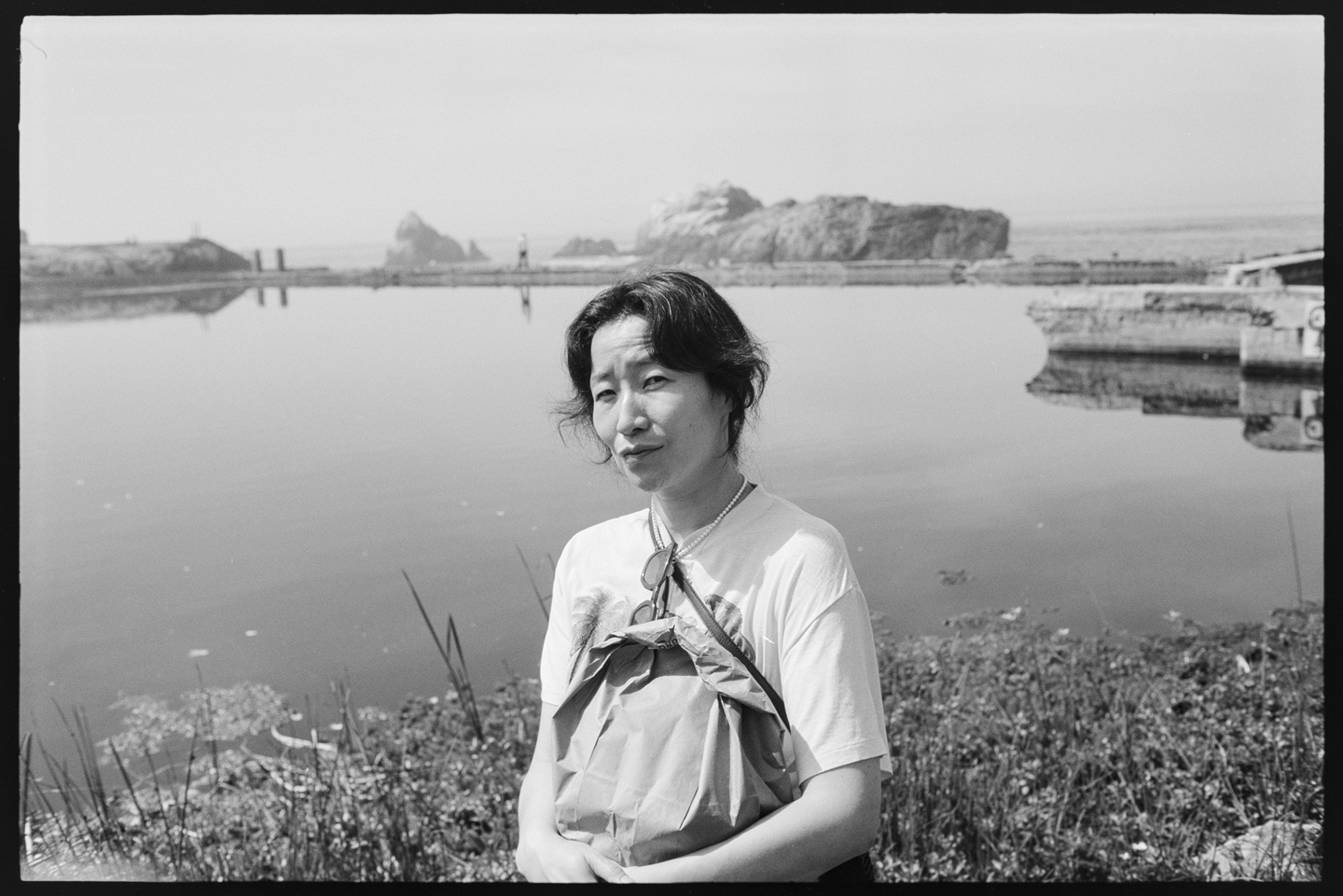
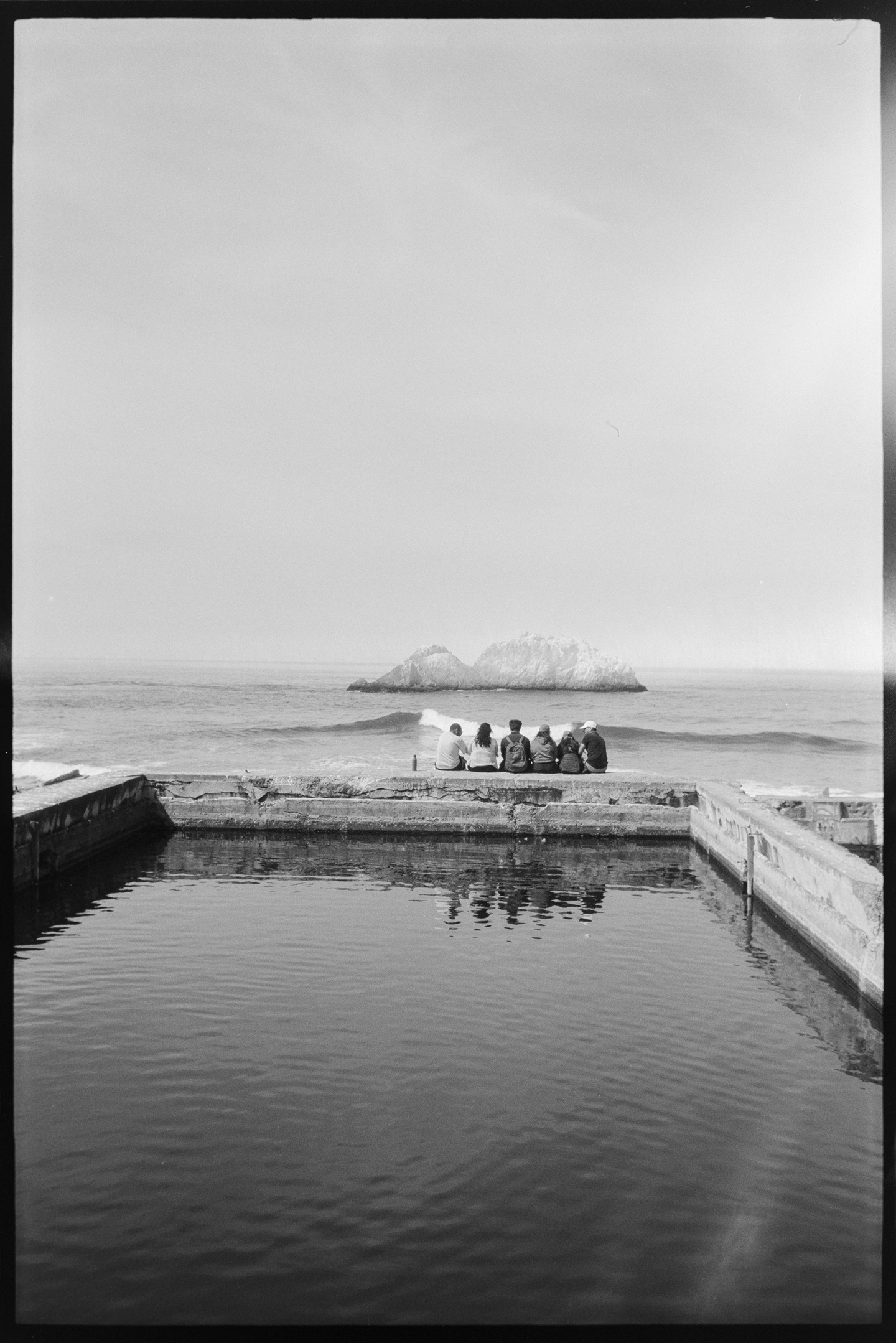
We parted ways with Kim in the early afternoon. From there James and I spent a few hours strolling south and walking through Golden Gate Park. I can't even remember what happened the rest of the day.
Day Five
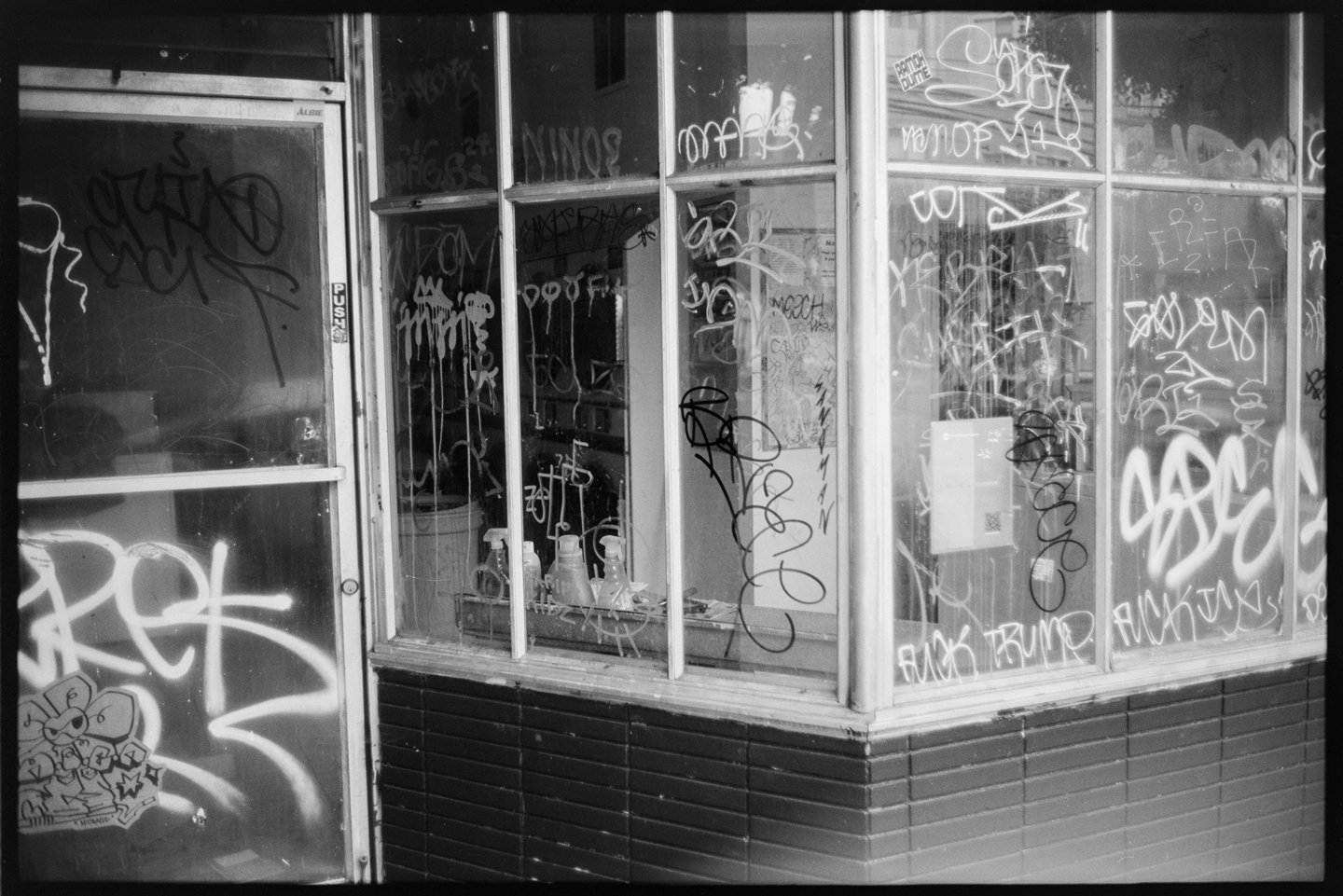
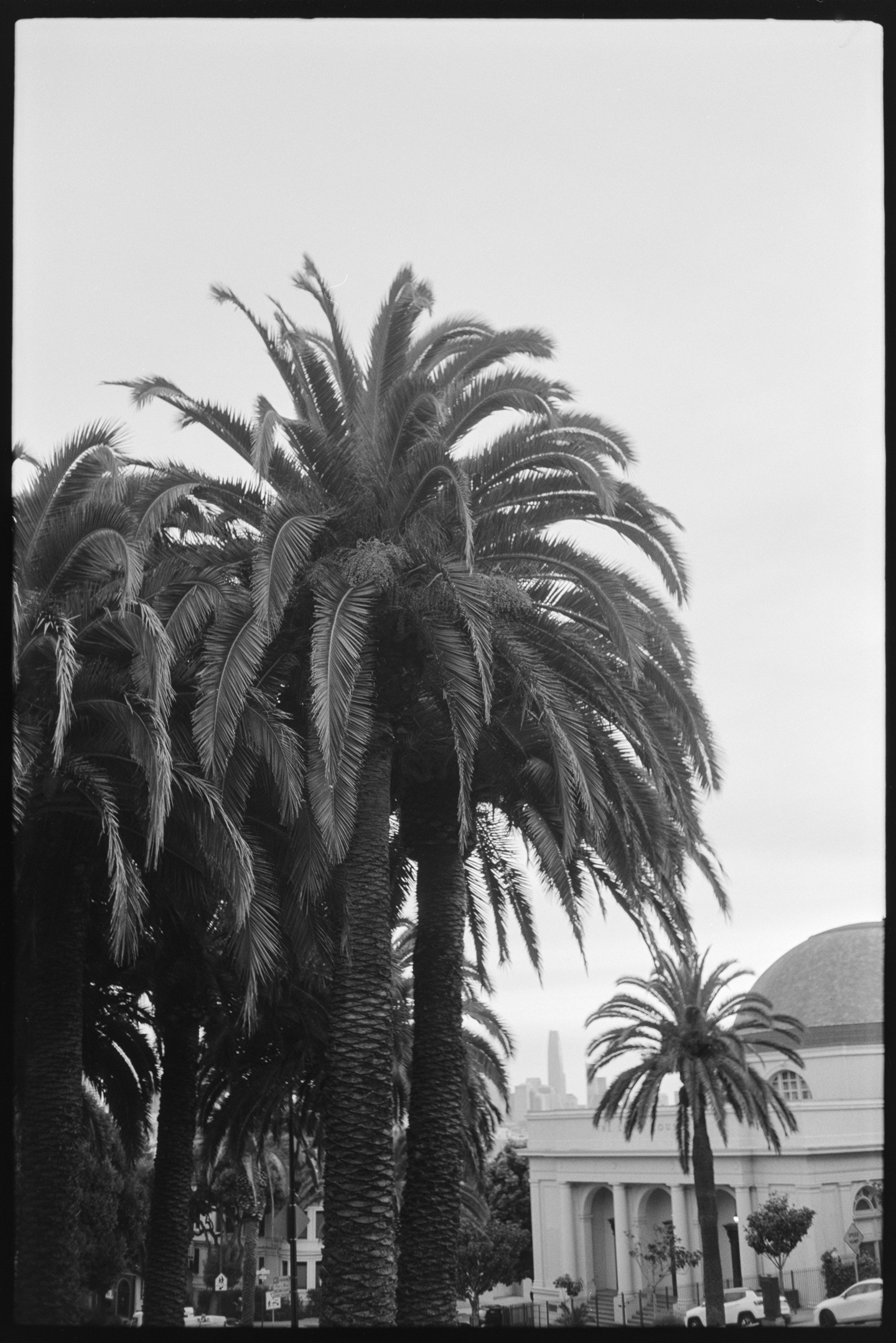
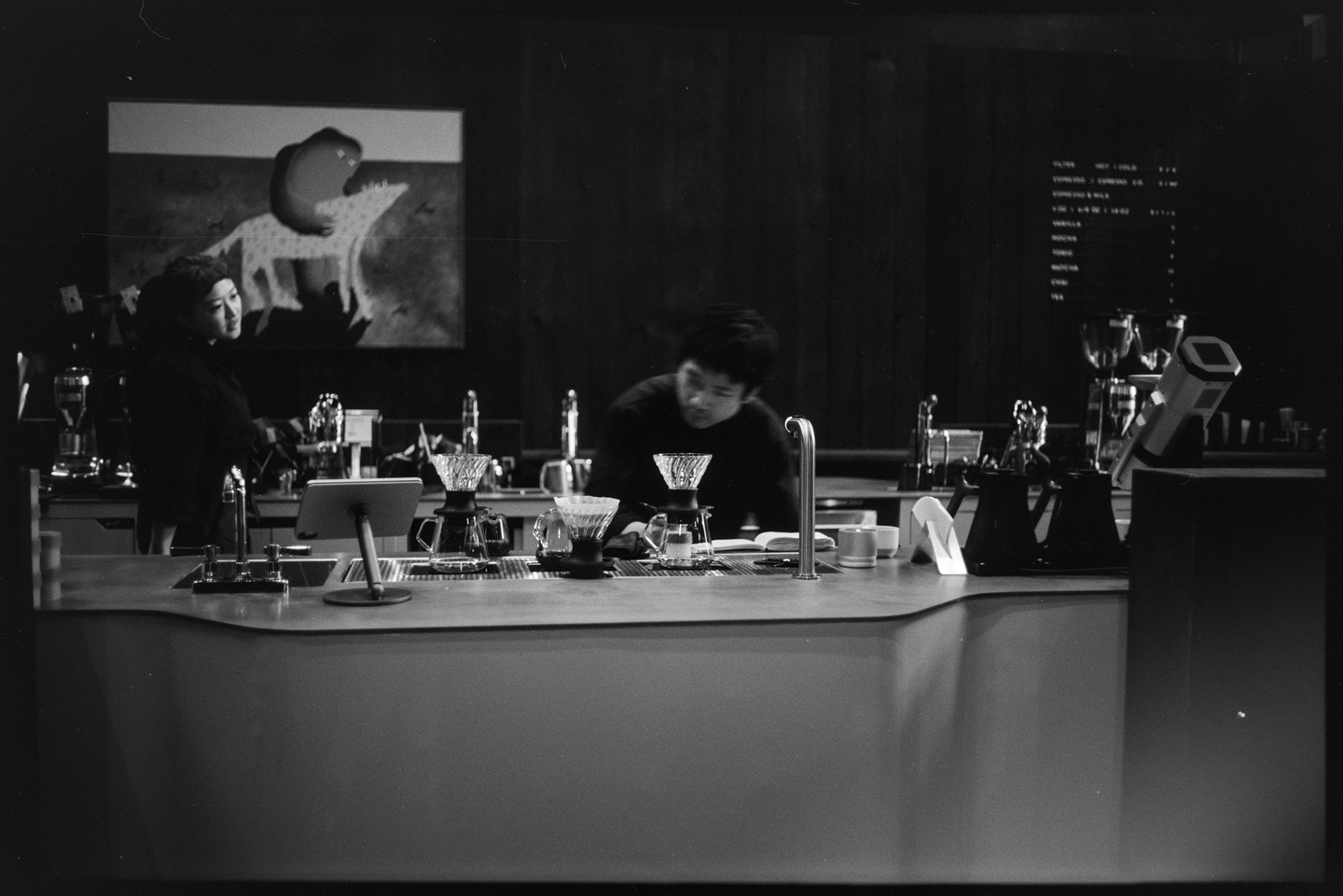
Monday was our last day in San Francisco. In the morning James and I split up to do our own explorations. I walked west from the Mission to Inner Sunset and snapped more photos along the way. In the afternoon we hopped on a plane and got out of there.
Epilogue
I'll definitely attend the next AAA. It was worth the trip. Plus, it did the trick: James and I have revived our music project. Throughout AAA he and I exchanged ideas and reflections on what we were experiencing. Sometimes we learned more about what we wanted to avoid than about what we wanted to do. James even came up with the first tenet of our manifesto:
1. Don't let the audience get to the point where they are waiting for you to be done.